
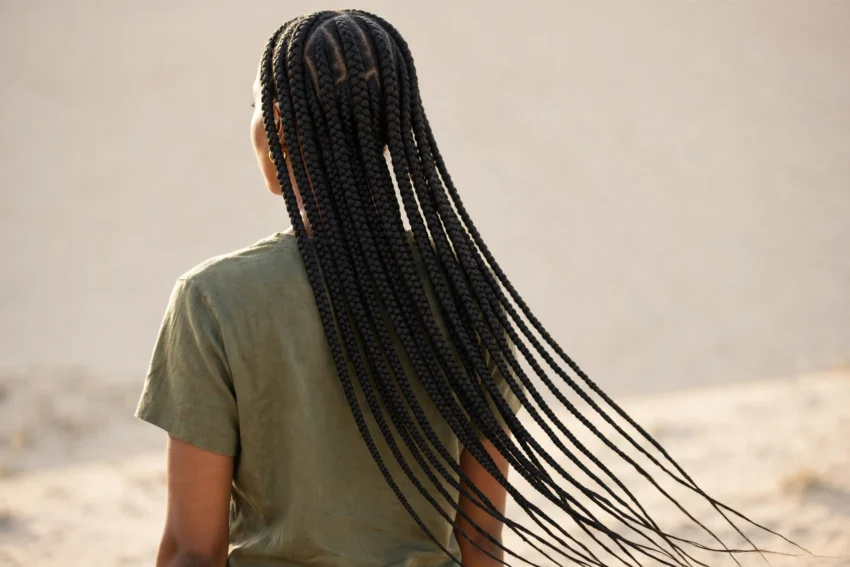
Box braids and knotless braids can look very similar at first glance. Both use extensions to create long, neat braids. Both protect your natural hair. The difference lies in how each braid starts, and that small difference changes the tension, the comfort, the install time and the final look.
The short verdict: knotless braids are usually gentler and look more natural at the root, while box braids are usually firmer and neater for longer. Sensitive scalps often suit knotless braids best.
What box braids are
Box braids are a classic protective style. The braider sections your natural hair into small square parts, then adds extension hair at the root and plaits it in with your own hair.
The start of each braid has a small knot that anchors the extension hair and gives a firm hold. Box braids can be worn long or short, thin or chunky.
What knotless braids are
Knotless braids are a newer variation of box braids. The braider starts each braid with your natural hair only, then feeds small pieces of extension hair into the braid as it moves down.
There is no knot at the root, so the braid starts flat and looks more natural. The root also feels less tight.
The key difference: how each style starts
The main difference is the start of the braid. Box braids begin with a knot that joins your hair and the extension hair at the scalp. Knotless braids begin with your own hair, and the extension hair is added gradually.
That change affects tension, how the root looks and how the braid moves. Box braids sit slightly higher at the root. Knotless braids lie flatter.
Tension and comfort: which is gentler on the scalp
Knotless braids are usually gentler on the scalp. The feed in method spreads the weight along the braid instead of pulling from one point at the root.
Box braids can feel tighter, especially in the first few days. The knot creates a firm anchor that pulls on the scalp, and some people find it causes soreness or headaches.
Tension also depends on the braider. Always tell your braider if a braid feels too tight. Pain is not a normal part of a protective style, and it can damage your edges over time.
Install time compared
Install time varies for both styles. It depends on the size and length of the braids, the thickness of your hair and the speed of your braider. Small braids take longer than large braids.
Knotless braids often take a little longer, because the feed in technique needs more care. Box braids are often a little quicker because the knot method is simpler to start.
Cost compared (what affects the price)
Cost varies a lot, so there is no single price for either style. Knotless braids often cost a little more, mainly because the feed in technique takes more time and skill.
Length, size, the amount of extension hair, and the location and experience of the braider all affect the price. Some stylists include the hair in the price. Others ask you to bring your own.
How long each style lasts and how to look after it
Both styles can last for several weeks with good care. Box braids often keep a neat finish for a little longer because the firm root holds its shape as your hair grows.
Keep your scalp clean and moisturised. Use a light oil or scalp spray, and avoid heavy products that cause build up. Tie your braids up with a silk or satin scarf at night to reduce frizz.
To wash braids, focus on the scalp. Use diluted shampoo, massage gently and rinse well. For more detail, read our guide to keeping braids from frizzing. Take braids out when they feel heavy, itchy or loose at the root.
Knotless vs box braids for fine hair
Fine hair needs a gentle approach. Heavy braids can pull on fine strands and cause breakage. Knotless braids are often the better choice because the weight is spread along the braid.
Choose a smaller amount of extension hair if your hair is fine. Box braids can still work if the braider uses light extensions and keeps the sections small.
Knotless vs box braids for thick hair
Thick hair can support both styles well. It holds braids firmly and copes better with the weight of extensions.
Box braids often suit thick hair very well. The firm root gives a neat finish that holds its shape. Knotless braids also work well. They feel lighter and lie flat at the root, although the install may take longer.
A side by side comparison table
| Feature | Box braids | Knotless braids |
|---|---|---|
| How it starts | With a knot at the root | With your own hair, then hair is fed in |
| Tension | Firmer, can feel tight at first | Gentler, less pull on the scalp |
| Root finish | Slightly raised, very neat | Flatter, more natural looking |
| Install time | Often a little quicker | Often a little longer |
| Cost | Often a little lower | Often a little higher |
| How long it lasts | Often keeps its shape for longer | Can loosen at the root sooner |
| Best for fine hair | Possible with light extensions | Usually the gentler choice |
| Best for thick hair | Very neat and secure | Light and comfortable |
Which should you choose (a short decision guide)
Choose knotless braids if you have a sensitive scalp, fragile edges or fine hair, or if you want a natural looking root and a lighter feel.
Choose box braids if you want a crisp, firm finish that holds its shape for longer. If you are still unsure, ask your braider to look at your hair type, your edges and your scalp.
Frequently asked questions
Do knotless braids last as long as box braids?
They can last a similar length of time, but box braids often keep a neater finish for longer. Knotless braids may loosen at the root sooner.
Can you do knotless braids on short hair?
Yes, in many cases. Your natural hair needs to be long enough to grip and start the braid. Very short hair may suit box braids better, because the knot helps to anchor the extensions.
Which hurts less, knotless braids or box braids?
Knotless braids usually hurt less. The feed in method puts less tension on the scalp, so there is less pulling and soreness. Tell your braider straight away if any braid feels painful.
Which is better for a sensitive scalp or edges?
Knotless braids are usually better for a sensitive scalp or fragile edges. The softer start and lower tension reduce the risk of soreness and breakage.
How do I wash braids without causing frizz?
Focus on the scalp, not the lengths. Use diluted shampoo, massage gently with your fingertips and rinse well. Pat the braids dry instead of rubbing them, and wear a silk scarf at night.
When should I take braids out?
Take them out when the roots look very loose, the braids feel heavy, or your scalp feels itchy or sore. Do not keep braids in for too long, even if they still look neat.
Conclusion
Knotless braids and box braids both give you a beautiful protective style. Knotless braids win on comfort and a natural root. Box braids win on a firm, long lasting finish. Think about your hair type, your edges and how long you want the style to last, then choose the style that fits your needs.