
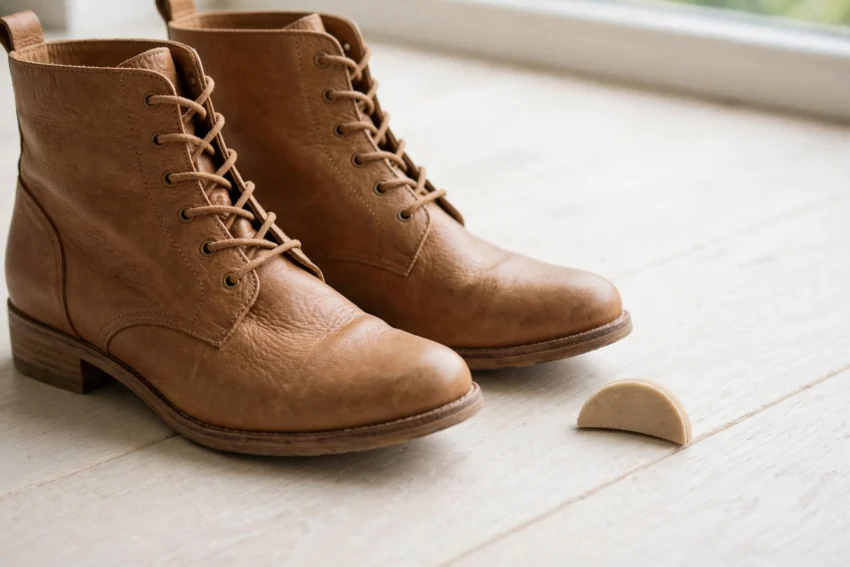
New shoes should feel good, not hurt. But most of us have bought a pair we loved in the shop, only to find they rub our heels raw on the first wear. The skin blisters, the walk home hurts, and the shoes end up at the back of the wardrobe. It does not have to be that way. Most heel rubbing can be stopped with the right fix, and some of it can be prevented before you buy. This guide explains why shoes rub, what to do right now, how to break new shoes in, and when the fit is the real problem.
Direct answer
To stop shoes rubbing your heels, stick a heel grip or a piece of moleskin inside the back of the shoe, wear socks that stop your heel slipping, and break new shoes in at home for short periods before you wear them out. If the shoe is the wrong size, or the heel counter is too stiff and too high, no insert will fix it. A shoe that rubs after a week of breaking in is the wrong fit, and you should return it if you can. For blisters, keep the skin clean, cover it with a blister plaster, and do not pop it. If a blister looks infected, or the pain does not settle, speak to your GP or a pharmacist.
Why shoes rub your heels
Shoes rub when your heel moves against the inside of the shoe with every step. A little movement is normal, but too much movement, or a hard edge pressing on one spot, breaks the skin. The most common causes are simple.
New shoes are the biggest cause. Leather and stiff materials need time to soften, and the heel counter, the firm cup at the back of the shoe, is at its stiffest when the shoe is new. It presses on the back of your heel until it moulds to your foot. That is normal breaking in, and it usually settles within a week.
The wrong size is the next cause. A shoe that is too big lets your heel lift and slip with every step, and that friction rubs the skin raw. A shoe that is too small squeezes your heel against the back, and the pressure does the same damage. Both feel different, but both end in blisters. If your heel slips a lot, the shoe is too big. If it pinches from the first minute, it is too small.
Your foot shape matters too. Some people have narrow heels and wide fronts, so a shoe that fits the front is loose at the back. Some people have a bony bump on the back of the heel, and that spot rubs on almost every shoe. Thin socks, or no socks at all, make it worse, because there is nothing between your skin and the shoe. Hot weather makes it worse too, because sweaty feet slip more inside the shoe.
Quick fixes that work now
If your shoes are rubbing today, you need a fix now, not a lecture about buying better shoes. Use one of these.
Heel grips
Heel grips are small sticky pads that go inside the back of the shoe. They take up the gap between your heel and the shoe, so your heel stops slipping. They cost very little, and you can buy them in most chemists and shoe shops. Stick them in clean and dry, press them firmly, and leave them for a few minutes before you put the shoes on. If your heel still slips, add a second grip, or use a thicker one. Heel grips work best in shoes that are slightly too big. They will not fix a shoe that is two sizes too big.
Moleskin and blister plasters
Moleskin is a soft, sticky felt that you cut to size and stick on the inside of the shoe, over the spot that rubs. It cushions the hard edge and stops the friction. Blister plasters work the other way round: you stick them on your skin, over the sore spot, and they cushion it while it heals. Use moleskin on the shoe for a hard edge, and a blister plaster on your skin for a sore spot. Both are cheap, and both are worth keeping in your bag when you wear new shoes.
Socks that stop slipping
Socks make more difference than most people think. A thin, smooth sock lets your heel slide. A sock with a grippy heel, or a slightly thicker sock, holds your heel in place. For heels and flats, try a low cut sock with a silicone grip at the heel. For boots and trainers, wear the socks you will wear with them, not the thin socks you tried them on with in the shop. Never wear new shoes with bare feet, because sweat makes the rubbing worse.
A little padding in the right place
If the back of the shoe has a hard seam or a stiff edge, a small piece of moleskin over that edge can stop it cutting into your heel. If the shoe is loose at the heel, a heel grip or an insole can take up the space. An insole lifts your foot slightly, and that can stop your heel slipping. Try one fix at a time, so you know which one worked. If you add three fixes at once, you will not know which one helped, and the shoe may end up too tight.
How to break in new shoes
Breaking in is not about suffering through pain. It is about letting the shoe soften and mould to your foot, a little at a time, at home, where you can take them off.
- Wear them at home first, for an hour at a time, with the socks you will wear with them. Walk around the house, up and down the stairs, and sit down in them too.
- Do this for a few days, adding an hour each day. If they rub, stop, and try again the next day. Do not wear them for a full day out on the first day.
- Use a heel grip or moleskin during breaking in, even if you plan to take it out later. It protects your skin while the shoe softens.
- For leather shoes, a little leather conditioner on the inside of the heel can help it soften. Test it on a hidden spot first, and do not use it on suede.
- For trainers, the upper usually softens faster than leather, but the heel counter can still be stiff. Wear them at home for a few days before you run or walk far in them.
If the shoes still rub after a week of breaking in at home, they are probably the wrong fit, not just stiff. A shoe that needs more than a week to stop hurting is telling you something. Read the section below on when to return them.
Fixes by shoe type
Different shoes rub in different places, and the fix depends on the shoe. Use the notes below for the pair you own.
High heels
High heels rub because your weight pushes your foot forward, and your heel lifts out of the back with each step. A heel grip inside the back helps, and a gel insole under the ball of your foot can stop your foot sliding forward. Choose a heel with a strap if you can, because a strap holds your heel in place. A block heel is steadier than a stiletto, and it rubs less, because your foot moves less. For a long evening, take a pair of comfortable flats to change into.
Boots
Boots rub at the heel and at the ankle, where the top of the boot meets your leg. A heel grip helps at the back, and a thicker sock helps at the ankle. Break boots in at home, with thick socks, for short periods. If the boot is stiff leather, it will soften, but it takes longer than a trainer, so give it a week. Our guide on how boots should fit explains how to check the fit, including calf fit, and the same measuring ideas help with any footwear.
Trainers
Trainers usually rub when they are new and the heel counter is stiff, or when they are the wrong width. If the heel counter is the problem, wear them at home for a few days, and it should soften. If the shoe is too narrow, your heel sits too high in the shoe, and it rubs. A wide-fit trainer can fix that, because your foot sits lower and steadier. Our guide on the best trainers for wide feet women explains how to measure your width and which brands offer wide fits.
Flats and loafers
Flats and loafers rub because they have no laces or straps to hold your heel in place, and your heel lifts with every step. A heel grip is the best fix, because it fills the gap at the back. A low cut sock with a silicone grip helps too. Avoid wearing flats with bare feet, because sweat makes your heel slip more. If the flat has a hard, stiff back, moleskin over the edge can stop it cutting in.
Prevention: buy shoes that will not rub
The best fix is not needing one. A few checks in the shop can save you a week of blisters.
- Shop late in the day, when your feet are at their largest. Feet swell as the day goes on.
- Wear the socks you will wear with the shoes. Thick socks change the fit.
- Try both feet, and fit the larger one. Most people have one foot slightly larger than the other.
- Walk for at least ten minutes in the shop, on a hard floor if you can. Walk, turn, and stand still. If the heel slips or pinches, it is the wrong fit.
- Press the back of the shoe. The heel counter should feel firm, not floppy, but the top edge should not dig into your heel when you walk.
- Check the toe room. You should be able to wiggle your toes, and there should be a small gap between your longest toe and the end of the shoe.
- Buy from a shop with a good returns policy, and keep the receipt. If they rub at home, you can take them back.
When it is a fit problem, not a breaking-in problem
Some shoes will never stop rubbing, however long you break them in. That is a fit problem, and no insert will fix it. Return the shoes if you can, and look for a different size or a different style.
Return them if your heel slips so much that a heel grip does not hold it, or if the shoe pinches from the first minute and does not ease after a few days at home. Return them if the heel counter is so high and stiff that it presses on the same spot every time, or if the shoe is a full size too big or too small. A shoe that is the wrong size is the wrong shoe, however much you like it.
Keep them if the rubbing is mild, in one small spot, and it eases a little each day. That is normal breaking in. A leather shoe that feels tight on day one and comfortable on day five is a good shoe. A shoe that hurts the same on day seven as it did on day one is not.
What to do about blisters
Blisters are the skin’s way of protecting itself from friction. A small blister will usually heal on its own if you stop the rubbing and keep it clean.
Cover the blister with a blister plaster, and keep it covered until it heals. Do not pop it, because the skin over the blister protects the raw skin underneath, and popping it can let germs in. If the blister is large, very painful, or in a place where it keeps bursting, speak to a pharmacist, who can advise you on how to care for it. If the skin around it looks red and hot, or the pain gets worse, speak to your GP, because it may be infected.
While a blister heals, wear different shoes, so the sore spot gets a rest. Do not wear the shoes that caused it until the skin has healed. When you do wear them again, use a heel grip or moleskin from the start, so the same spot does not rub again.
Frequently asked questions
How do I stop my shoes rubbing my heels?
Stick a heel grip or a piece of moleskin inside the back of the shoe, wear socks that stop your heel slipping, and break new shoes in at home for short periods before you wear them out. If the shoe is the wrong size, or the heel counter is too stiff and too high, no insert will fix it, and you should return the shoes if you can.
Do heel grips really work?
Yes, for shoes that are slightly too big at the heel. A heel grip fills the gap between your heel and the shoe, so your heel stops lifting and slipping with each step. It will not fix a shoe that is two sizes too big, or a shoe that pinches because it is too small.
How long does it take to break in new shoes?
Most shoes soften within a week of wearing them at home for an hour or two a day. Leather shoes can take a little longer than trainers. If the shoes still rub after a week of breaking in, they are probably the wrong fit, not just stiff.
Should I wear new shoes with socks?
Yes. Wear the socks you will wear with the shoes, not thin shop socks. A slightly thicker sock, or a sock with a grippy heel, holds your heel in place and protects your skin while the shoe softens. Never wear new shoes with bare feet.
Can I stretch shoes that rub?
A little, but not much. Leather shoes can stretch a little with wear, and a cobbler can stretch some leather shoes for you. But a shoe that is too small across the heel will not stretch into the right size. It is better to buy the right size from the start.
What is the best thing to put on a rubbed heel?
A blister plaster, if the skin is sore or blistered. It cushions the spot and protects it while it heals. For the shoe itself, moleskin over the hard edge, or a heel grip inside the back, stops the rubbing. Use the plaster on your skin and the moleskin or grip on the shoe.
Why do my shoes rub only one heel?
Most people have one foot slightly larger than the other, and one heel can be shaped differently from the other. A shoe that fits one foot well can rub the other. Try a heel grip in the shoe that rubs, and fit the larger foot when you buy. If one heel has a bony bump, that spot will rub on almost every shoe, and moleskin over the edge can help.
When should I return shoes that rub?
Return them if your heel slips so much that a heel grip does not hold it, if the shoe pinches from the first minute and does not ease after a few days at home, or if the heel counter is so high and stiff that it presses on the same spot every time. Keep them if the rubbing is mild, in one small spot, and it eases a little each day.
Conclusion
Shoes rubbing your heels is common, and it is usually fixable. A heel grip or a piece of moleskin, the right socks, and a few days of breaking in at home will sort out most new shoes. But no fix can save a shoe that is the wrong size or the wrong shape for your foot. Buy carefully, try them on late in the day, walk in them, and send them back if they pinch. Your heels will thank you, and the shoes you keep will be the ones you actually wear.
Next in the comfort footwear cluster: best boots for wide calves UK.