
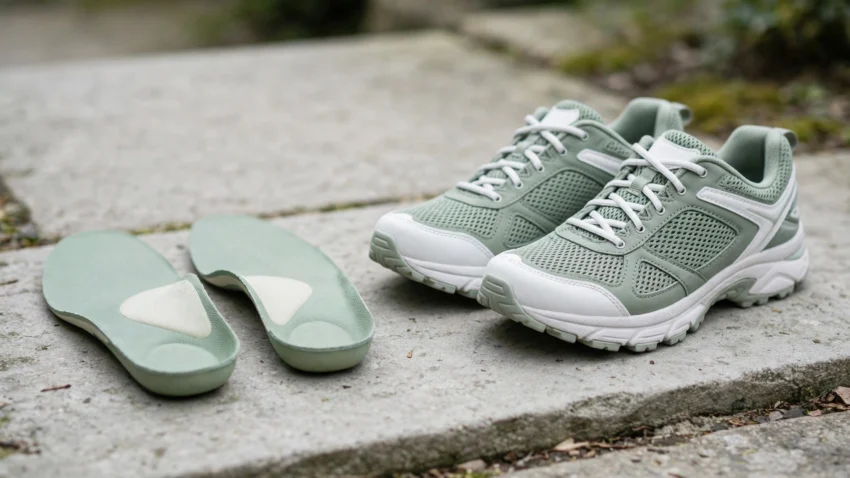
Best shoes for flat feet women UK: the short answer
The best shoes for flat feet have firm arch support, a stable heel counter and a removable insole, so you can add an orthotic if you need one. Look for a structured walking shoe or trainer with a wide toe box, a low heel and laces or straps that hold your foot still. Avoid flat, soft shoes with no shape under the arch. The right pair will not change the shape of your foot, but it will spread the load better and help your feet feel less tired.
Flat feet are common. Many women walk around with them for years without knowing. The trouble often starts when a new pair of shoes gives the arch nothing to rest on. Then the foot rolls inward with each step, and the knees and lower back pick up extra work. This guide covers what flat feet are, how to spot them, and what to look for when buying shoes. If you have pain that does not settle, speak to your GP or a podiatrist. This guide covers everyday footwear, not medical treatment.
What flat feet are and what overpronation means
Flat feet mean the arch on the inside of the foot sits low or touches the ground when you stand. Some people are born with flat feet. Others develop them as ligaments stretch or the tendon that supports the arch weakens. Flat feet on their own are not an illness. Plenty of people with flat feet walk, run and stand all day without any trouble.
Overpronation is the movement that often goes with flat feet. When you walk, your foot naturally rolls inward a little after your heel lands. That roll, called pronation, helps your foot absorb shock. Overpronation means the foot rolls inward too far or for too long. The arch flattens, the ankle tilts inward, and the foot stays rolled for more of the step than it should. Over time, that extra roll can lead to tired feet, sore knees and aching shins. Flexible flat feet are the common kind. The arch appears when you lift your foot and flattens when you stand on it. They respond best to supportive shoes, because a shaped footbed can hold the arch where it should sit.
Flat feet and plantar fasciitis are different problems, even though they are often confused. Plantar fasciitis is pain in the band of tissue under the foot, usually worst with the first steps in the morning. Flat feet are about the shape of the foot and how it moves. If your main problem is sharp heel pain first thing in the morning, our guide to the best shoes for plantar fasciitis women explains what to look for there.
How to tell if you have flat feet
Wet the sole of your foot and step onto brown paper or a dry pavement. If you can see almost the whole sole, including the inner edge, your arch is low. If a clear curve is missing on the inner side, your arch is higher. A full footprint does not prove you have a problem. It only shows your arch shape.
Look at your old shoes too. If the inner edge of the heel is worn down much more than the outer edge, your foot is likely rolling inward. If the insoles are crushed on the inner side, your arch is pressing down hard there.
Watch for the signs your body gives you. Feet that ache after a normal day can be a clue. So can tired arches by the afternoon, sore knees after a long walk, or shin pain when you start walking more than usual. Shoes that feel fine for the first hour and then start to hurt are another common sign. None of these signs on their own means you have flat feet. Together, they are a reason to pay attention to the support in your shoes. If you are unsure, a podiatrist can check your feet properly.
What to look for in shoes for flat feet
The best shoe for flat feet is not always the softest one. Soft cushioning flattens after a few steps and the arch drops again. What you want is structure: a shoe that holds your foot steady while letting it move naturally.
Arch support
Arch support is the most important feature. Press the middle of the insole. It should feel shaped, not flat. A shaped footbed holds your arch up, so your foot rolls inward less with each step. A thin flat insole gives your arch nothing to rest on.
A firm heel counter
The heel counter is the stiff cup around the back of the shoe. Squeeze it between your fingers. It should feel firm and hold its shape. A soft heel counter lets the heel tilt inward as you walk. A firm counter keeps the heel upright and stops the ankle from rolling.
A stable midsole
The midsole is the layer between the insole and the outsole. For flat feet, it should feel stable rather than squashy. Twist the shoe gently. It should resist twisting in the middle and bend only at the ball of the foot, where your toes bend.
A wide toe box
A wide toe box gives your toes room to spread, which helps steady the foot. A narrow toe box squeezes the toes together and forces the foot to roll inward to find balance. Look for a rounded or square toe shape rather than a pointed one. If width is a problem for you as well as flat feet, our guide to the best trainers for wide feet women covers fits that run wide and how to judge width properly.
Removable insoles
A removable insole is worth looking for even if you do not use orthotics yet. It means you can swap the factory insole for a supportive insole or a custom orthotic without the shoe feeling tight. Shoes with glued in insoles give you no choice. Lift the insole in the shop and check that it comes out cleanly.
Laces or straps
Laces and straps let you adjust the fit across the top of the foot, which keeps the heel seated in the heel counter. Slip on shoes rely on a tight fit to stay on, and that tightness can squeeze the foot. A lace up shoe lets you tighten the midfoot and leave the toes free.
A low, stable heel
A low heel keeps your weight spread evenly across the foot. A heel of a few centimetres is fine, but a high heel shifts weight forward and forces the arch to collapse further. A broad heel base is steadier than a narrow stiletto heel.
Best shoes for flat feet by use
No single shoe suits every part of your day. Match the shoe to what you will be doing in it.
For work
Work shoes need support that lasts all day without looking like a walking boot. Look for a leather lace up shoe or a smart loafer with a shaped footbed and a firm heel counter. A cushioned collar helps if you are on your feet for long stretches. Avoid ballet flats with paper thin soles. They have no arch support and no heel counter. A low block heel brogue or a structured Derby style shoe suits the office better.
For walking
Walking shoes are where support matters most, because you take thousands of steps in them. Look for a rocker sole, which curves gently from heel to toe and helps your foot roll forward smoothly. A firm heel counter and a stable midsole are essential. Mesh uppers with overlays give support without weight, and a waterproof lining is useful for UK weather. Try them on with the socks you will walk in and walk around the shop for several minutes. Feet spread as they warm up, so a shoe that fits at first can feel tight later.
For everyday trainers
Everyday trainers are the easiest place to get good support. Look for a stability trainer rather than a neutral one. Stability trainers have a firmer section on the inner side of the midsole, often called a medial post, which slows the inward roll. Avoid fashion trainers with flat soles and no structure. They look like trainers but work like slippers. A proper stability trainer will feel firmer under the arch when you first put it on. That firmness is the support doing its job.
For smart occasions
Smart occasions are the hardest, because dress shoes rarely have much support. Look for a low block heel or a wedge with a broad base. An ankle strap or a Mary Jane strap holds the foot better than a court shoe with nothing to keep it in place. A cushioned insole with a shaped arch can be added if the insole is removable. Keep the heel low and the toe box roomy. If you will be standing for hours, take supportive flats for the journey home.
For boots in colder months
Boots can be a good choice for flat feet, because they support the ankle as well as the arch. Look for an ankle boot or a Chelsea boot with a firm heel counter, a shaped insole and a low heel. Laces or a side zip let you adjust the fit around the ankle. Avoid boots with flat insoles and soft uppers that collapse around the ankle. A sturdy walking boot with a lugged sole works well for wet and uneven ground.
Orthotic friendly shoes: how to choose a pair that works with insoles
An orthotic is an insole shaped to support your foot. Some are sold ready made in pharmacies and shoe shops. Others are made for you by a podiatrist after your feet have been measured. A shoe that works with an orthotic has three things: a removable insole, enough depth inside, and a firm heel counter to hold the orthotic in place.
Take the factory insole out and put your orthotic in its place. If the shoe then feels tight across the top of your foot, it is too shallow. Look for a shoe with a deep toe box or extra depth. Half a size up can help, but only if the heel still grips. A shoe that is too long will slip at the heel and rub.
Check the fit with the orthotic in place. Walk around the shop for a few minutes. The orthotic should sit flat and not slide forward, and the heel should stay seated in the heel counter. Lace up shoes are usually the easiest to fit with orthotics, because you can adjust the laces.
Ready made insoles are a good first step if you are not sure whether you need a custom orthotic. They cost less and you can try them in several pairs of shoes. If a ready made insole helps but does not solve the problem, a podiatrist can assess whether a custom one would do more.
What to avoid when you have flat feet
Some shoes work against flat feet, however comfortable they feel at first.
- Flat ballet pumps with thin soles. No arch support, no heel counter, no cushioning.
- Very soft, squashy trainers. Soft cushioning feels kind for a few steps, then flattens and the arch drops again.
- Flip flops and flat sandals with no shape. They force your toes to grip to keep them on, which changes how you walk. A sandal with a shaped footbed and a heel strap is a better choice.
- High heels worn all day. A high heel shifts your weight forward and loads the front of the foot. Keep heels for short occasions.
- Shoes that bend in the middle. If a shoe folds in half when you twist it, it has no structure to control overpronation.
- Old, worn out shoes. Support breaks down over time. If the heel counter has collapsed or the midsole is creased on the inner side, the shoe no longer supports your foot.
How to try on shoes for flat feet
These steps will help you get the fit right.
- Shop in the afternoon. Feet swell during the day, so a shoe that fits in the morning can feel tight by evening.
- Wear the socks you will use with the shoes. Thick socks change the fit by a noticeable amount.
- Take your orthotic or insole with you. Try the shoe with it inside, not without it.
- Check the arch support first. Press the insole and feel for a shaped rise under the arch.
- Squeeze the heel counter. It should feel firm and hold its shape.
- Twist the shoe. It should resist twisting in the middle and bend only at the ball of the foot.
- Stand and walk for several minutes. Your feet need time to settle into the shoe.
- Check your toes. They should be able to wiggle. If they touch the front or the sides, the shoe is too small.
- Try both shoes. Most people have one foot slightly bigger than the other. Fit the bigger foot.
- Walk on a hard floor. Carpet hides how a shoe really feels. A hard surface shows whether the heel slips.
Looking after supportive shoes
Rotate between two pairs if you can, so each pair has a day to dry out and recover its shape. Air them after wear rather than leaving them in a closed cupboard while damp. Stuff them with newspaper or shoe trees to hold their shape.
Clean them regularly. Brush off dry mud, wipe leather with a damp cloth, and let them dry at room temperature, away from radiators. Heat can warp the midsole and damage the glue.
Replace the insoles when they flatten. A flat insole is no longer supporting anything. If the shoes are worn down on the inner heel, or the heel counter has collapsed, it is time for a new pair.
How much should you spend
You do not need to spend a fortune to get good support. High street walking shoes and stability trainers cover the basics well, and many have removable insoles and firm heel counters. Spending more usually buys better materials and a longer lasting midsole.
Think about cost per wear. A pair worn every day for a year costs little per day, even if the price on the box looks high. A pair you wear twice and abandon because it hurts is wasted money at any price. Buy the pair that supports your feet rather than the pair with the lowest price.
Frequently asked questions
Can flat feet cause knee pain?
Flat feet can contribute to knee pain. When the foot rolls inward, the shin and the knee turn inward with it, and that extra twist can irritate the knee over thousands of steps a day. Supportive shoes help by holding the foot straighter. If knee pain persists, speak to your GP or a physiotherapist.
Do I need orthotics if I have flat feet?
Not always. Many women with flat feet do well with a supportive shoe alone, especially if they have no pain. Orthotics help when a good shoe is not enough, or when pain keeps coming back. Start with proper arch support and a firm heel counter. If your feet still ache, a podiatrist can advise whether an orthotic would help.
Are flat shoes bad for flat feet?
Completely flat shoes with no arch support are not ideal for flat feet. They give the arch nothing to rest on, so the foot rolls inward with every step. A shoe with a small heel lift and a shaped footbed is more comfortable. For short periods, a flat shoe with a supportive insole is a reasonable compromise.
Can trainers be good for flat feet?
Yes, if you choose the right kind. A stability trainer with a firm heel counter, a shaped insole and a stable midsole is one of the best options for flat feet.
Do arch supports weaken your feet?
There is no good evidence that wearing arch supports weakens healthy feet. They support the arch while you wear them and they do not stop the muscles in your feet from working. Foot exercises, such as picking up a towel with your toes, can help too. Ask a podiatrist or physiotherapist which ones suit your feet.
What is the difference between flat feet and fallen arches?
They describe the same thing in most cases. Fallen arches is the older term for arches that have dropped over time. Flat feet is the term used more often now. A podiatrist can tell you whether your flat feet are flexible or rigid, which matters more than the name used.
Are sandals OK for flat feet?
Sandals can be fine if they have a shaped footbed and a strap that holds the heel in place. Look for a contoured footbed with a raised arch and a deep heel cup. Avoid flat flip flops with no shape, which force your toes to grip and give the arch no support.
When should I see a podiatrist about flat feet?
See a podiatrist if you have pain that does not settle, pain that stops you walking comfortably, swelling around the ankle, or one foot that looks much flatter than the other. Also seek advice if your feet have changed shape quickly, or if you have diabetes.
Conclusion
The best shoes for flat feet women in the UK are the ones with real structure: firm arch support, a stable heel counter, a removable insole and a wide toe box. Choose by use, not by looks alone. A stability trainer for everyday wear, a structured walking shoe for long days out, and a low block heel for smart occasions cover most of the week. Try shoes on in the afternoon and check the heel counter and the twist test before you buy. If your feet still ache in a good shoe, speak to your GP or a podiatrist.
Next in the comfort footwear cluster: how to stop shoes rubbing your heels UK.