
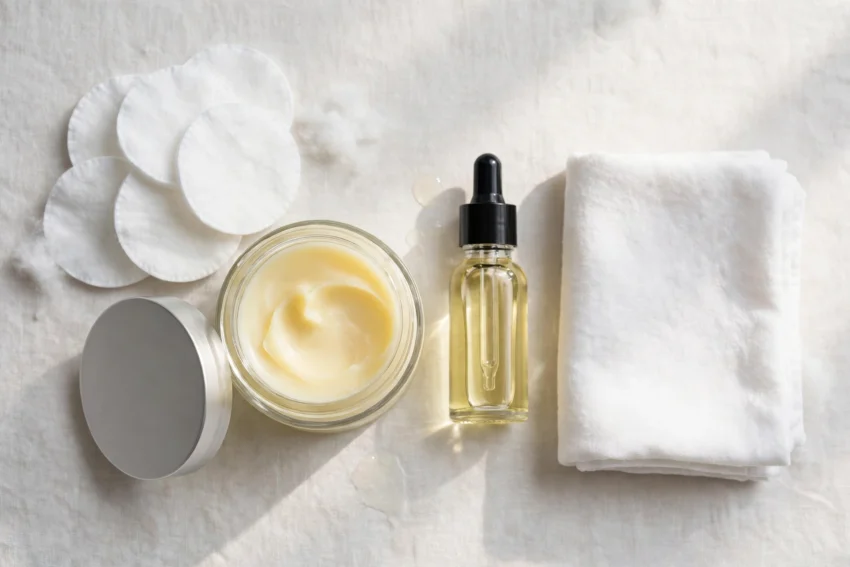
Waterproof makeup is made to stay put through rain, sweat, tears and long days. That is exactly why it can be hard to take off. The best way to remove waterproof makeup is to dissolve it first with an oil based remover, such as a cleansing balm or an oil cleanser, then wash your face with a gentle cleanser. Rubbing dry skin with a rough cloth only smears the makeup around and leaves the delicate eye area sore.
This guide explains why waterproof makeup resists water, compares micellar water, cleansing balm and oil cleanser, and shows how to choose the right one for your skin type. It also covers waterproof mascara removal, the role of SPF under makeup, and the mistakes that cause breakouts and lash loss.
Why Waterproof Makeup Resists Water
Waterproof makeup is built around ingredients that repel water. Most waterproof formulas use film forming polymers, silicones and waxes. These create a flexible layer over the skin or lashes that water cannot easily break through. Ordinary face wash is water based, so it slides over that layer instead of dissolving it. That is why splashing your face or using a plain foam cleanser leaves mascara and eyeliner behind.
Oil dissolves oil. The waxes and silicones in waterproof makeup bond with oils, so an oil based remover breaks the film apart. This is the simple science behind cleansing balms and oil cleansers.
Waterproof and water resistant are not the same thing. Water resistant makeup holds up against light moisture but breaks down with real contact, such as swimming or heavy rain. Waterproof makeup is made to survive full submersion. Long wear makeup sits between the two. It lasts longer than a standard formula but does not carry the same water proofing film. Knowing which type you are wearing helps you pick the right remover.
Removal Methods Compared
Three methods dominate waterproof makeup removal: micellar water, cleansing balm and oil cleanser. Each works, but they suit different skin types, budgets and routines. The comparison below shows how they differ, so you can choose with confidence rather than trial and error.
| Method | How it works | Best for | Watch out for |
|---|---|---|---|
| Micellar water | Tiny cleansing molecules lift makeup and dirt onto a cotton pad | Light makeup, sensitive skin, quick removal | May need several pads for heavy waterproof mascara |
| Cleansing balm | A solid balm melts into oil and dissolves makeup on contact | Full waterproof makeup, dry and normal skin | Needs a thorough rinse or second cleanse to avoid residue |
| Oil cleanser | A liquid oil breaks down waterproof formulas and rinses away | Heavy makeup, dry skin, a one step first cleanse | Some formulas leave a film if not emulsified well |
Micellar Water
Micellar water contains micelles, which are tiny clusters of cleansing molecules suspended in water. One end of each micelle attracts oil and makeup, while the other end attracts water. When you sweep a soaked cotton pad across the skin, the micelles pick up makeup and hold it on the pad. No rinsing is needed, which makes micellar water the fastest option.
It works well for light waterproof makeup and for days when you wore little else. It also suits sensitive skin, because most micellar waters are fragrance free and need no rubbing to work. The catch is capacity. A single pad can only hold so much makeup. Heavy waterproof mascara and long wear eyeliner may need three or four pads, and each extra pass adds friction around the eyes. If you press and hold a soaked pad over the lashes for a few seconds first, the makeup softens and lifts off with far less rubbing.
Always follow micellar water with a gentle face wash if you wore full makeup. Micellar water removes makeup, but it is not a complete cleanser on its own.
Cleansing Balm
A cleansing balm starts as a solid and melts into a rich oil when it touches warm skin. Massage it over dry skin and it dissolves waterproof makeup within seconds, including stubborn mascara and eyeliner. Add a little water and most balms turn milky, which lets them rinse away cleanly.
Balms are the most thorough option for a full face of waterproof makeup. They need almost no rubbing, which protects the eye area. They also suit dry and normal skin, because the oil base leaves skin feeling soft rather than tight. Take time to emulsify the balm fully with water before rinsing, and follow with a gentle second cleanse if your skin still feels coated.
Oil Cleanser
An oil cleanser is a liquid version of the same idea. It pours out as oil, breaks down waterproof formulas on contact, and rinses off when mixed with water. It is quick, effective and easy to use in the shower. Many people with dry skin prefer it to a balm because it spreads fast and leaves no heavy residue when it is properly emulsified.
The quality of the formula matters. A good oil cleanser turns milky on contact with water and rinses clean. A poor one stays slick and can leave a film that traps dirt against the skin. If your skin feels oily after rinsing, add more water to emulsify it, or follow with a gentle second cleanse.
Which Method Should You Choose?
For a light makeup day, micellar water is enough. For a full face of waterproof makeup, a cleansing balm or oil cleanser does the job faster and with less rubbing. For sensitive skin, micellar water or a fragrance free balm is the safest start. For dry skin, a balm or oil cleanser adds comfort. For oily skin, use an oil cleanser or balm as a first step only, and always follow with a water based cleanser. What matters most is the technique: dissolve first, rub less, and always finish with a gentle wash.
Removal by Skin Type
Skin type changes which remover works best and which mistakes to avoid. Use the guidance below as a starting point, and adjust if your skin reacts. If you have a diagnosed skin condition, speak to your GP or a dermatologist before changing your routine.
Dry Skin
Dry skin needs a remover that does not strip natural oils. A cleansing balm or oil cleanser is the best fit, because both dissolve makeup while leaving the skin barrier intact. Avoid foaming cleansers with strong surfactants, which can leave dry skin feeling tight and flaky. After cleansing, apply moisturiser while the skin is still slightly damp.
Oily Skin
Oily skin still needs an oil based first step for waterproof makeup, but the second cleanse matters more. Use a balm or oil cleanser to dissolve the makeup, then wash with a gentle gel or foaming cleanser to remove the residue. Skipping the second cleanse is the most common cause of breakouts after switching to an oil based remover. The oil itself does not cause spots. Leftover oil mixed with makeup and sweat does.
Combination Skin
Combination skin usually has an oily T zone and drier cheeks. A cleansing balm works well across the whole face, because it dissolves makeup evenly without over drying the cheeks. Follow with a gentle cleanser, and use a light moisturiser on the oily areas and a richer one on dry patches if needed.
Sensitive Skin
Sensitive skin reacts to fragrance, alcohol and friction more than to any single product type. Choose a fragrance free micellar water or a plain cleansing balm with a short ingredient list. Patch test any new remover on your jawline for a few days before using it around your eyes. Press a soaked cotton pad gently against the skin instead of scrubbing, and rinse with lukewarm water rather than hot. If redness, stinging or swelling appears, stop using the product and speak to your GP or a dermatologist.
Acne Prone Skin
Acne prone skin needs thorough removal without harsh scrubbing. Double cleansing is the standard approach: an oil based first cleanse to dissolve waterproof makeup, then a gentle water based cleanser to wash everything away. Never sleep in makeup, and never rely on wipes alone. Wash your hands before you start, and use a clean cotton pad or cloth each time.
How to Remove Waterproof Mascara Without Pulling Lashes
Waterproof mascara is the hardest part of waterproof makeup to remove, and the lashes are the most fragile part of the face to clean. Pulling and rubbing cause lashes to snap and fall out. A gentle soak and dissolve method protects them.
Follow these steps every time you remove waterproof mascara.
- Soak a cotton pad with micellar water or an oil based remover. Do not use a dry pad.
- Press the pad gently over your closed eye and hold it there for 20 to 30 seconds. This gives the remover time to dissolve the mascara.
- Wipe downward in one slow, gentle motion. Do not rub side to side.
- Repeat with a fresh pad if makeup remains. Two gentle passes beat one hard scrub.
- Use a cotton bud with a little remover to clean the lash line and the corners of the eyes.
- Wash your face with a gentle cleanser to remove any leftover residue.
Never pull at clumps of mascara with your fingers or tweezers. If mascara is stuck to the lashes, hold the soaked pad in place for longer instead of forcing it. A cleansing balm massaged very gently over closed eyes works well for stubborn formulas.
Take extra care if you have a lash lift or lash extensions. The wrong remover can shorten the life of a lift or loosen extensions. Oil based removers can weaken the bond on extensions, so check the aftercare advice your technician gave you. Our guide to lash lift aftercare explains how long a lift lasts and what to avoid in the first days after treatment. If you are choosing between treatments, our comparison of lash lift vs lash extensions sets out the differences in cost, upkeep and longevity.
Healthy lashes also depend on what happens away from the eye area. Heat styling damages hair, and lashes are hair too. If you use heated tools often, read our guide on how to protect hair from heat damage for habits that protect all your hair, including lashes and brows.
SPF Under Makeup
Sun protection sits under makeup, not over it. Apply sunscreen as the last step of your skincare routine and the first step before makeup. Let it settle for a few minutes before you apply foundation or concealer. This gives the sunscreen time to form an even layer on the skin.
SPF complicates makeup removal in a useful way. Sunscreen is designed to stay on the skin, and many modern formulas are water resistant. That means your evening routine must remove both sunscreen and makeup. An oil based first cleanse handles both in one step, which is another reason a balm or oil cleanser is worth using on days when you wore SPF and waterproof makeup together.
Do not rely on makeup with SPF as your only sun protection. Makeup rarely provides enough coverage on its own, because most people apply far less than the amount needed for the labelled protection. A dedicated sunscreen underneath is the reliable option.
Mistakes That Damage Skin and Lashes
Most skin and lash damage from waterproof makeup comes from the removal routine, not the makeup itself. These are the mistakes to avoid.
Rubbing and Scrubbing
Rubbing is the single most damaging habit in makeup removal. The skin around the eyes is the thinnest on the face, and repeated scrubbing causes redness and soreness in the short term. It also snaps lashes. Always dissolve first and wipe gently. If makeup is not coming off, you need more time with the remover, not more force.
Sleeping in Makeup
Sleeping in waterproof makeup blocks pores, dries out the skin and leaves mascara to flake into the eyes overnight. It is one of the fastest routes to breakouts and eye irritation. Even on late nights, a two minute routine with micellar water and a gentle wash is far better than nothing. Keep micellar water and cotton pads by your bed for nights when you cannot face the bathroom.
Using Makeup Wipes as a Full Routine
Makeup wipes are convenient, but they are not a complete cleanser. They smear makeup across the skin and leave a film of residue behind. They also rely on friction, which is hard on the eye area. Use wipes only as a backup when you have no other option, and follow with a proper wash as soon as you can.
Skipping the Second Cleanse
Double cleansing sounds like extra work, but it is the step that keeps oil based removers safe for every skin type. The first cleanse dissolves makeup and sunscreen. The second cleanse washes away the residue. Skipping the second step leaves a layer of oil and dissolved makeup on the skin, which can block pores and cause breakouts.
Using the Wrong Products Around the Eyes
Strong exfoliants, scrubs and alcohol based toners do not belong near the eyes. The eye area needs the gentlest products in your routine. Keep active skincare, such as strong acids and retinoids, away from the lash line unless a dermatologist has advised otherwise. If your eyes sting, water or swell after using a product, stop using it and seek advice from your GP or a dermatologist.
Sharing Makeup or Removers
Sharing mascara, eyeliner or cotton pads spreads bacteria and raises the risk of eye infections. Keep eye makeup personal. Replace mascara every three months, and throw away any eye product that has caused irritation. If your eye becomes red, painful or swollen, stop wearing eye makeup and speak to your GP or a pharmacist.
Frequently Asked Questions
Can micellar water remove waterproof makeup?
Yes, micellar water can remove waterproof makeup, but it works best on light layers. Soak a cotton pad, press it over the area for a few seconds, then wipe gently. Heavy waterproof mascara may need several pads. For a full face of waterproof makeup, a cleansing balm or oil cleanser is faster and needs less rubbing.
Do I need to double cleanse after removing waterproof makeup?
Yes, double cleansing is the safest routine after waterproof makeup. The first cleanse, with a balm or oil cleanser, dissolves the makeup and sunscreen. The second cleanse, with a gentle water based cleanser, washes away the residue. Skipping the second cleanse leaves oil and dissolved makeup on the skin, which can block pores and cause breakouts.
How do I remove waterproof mascara without losing lashes?
Soak a cotton pad with an oil based remover or micellar water, press it over your closed eye for 20 to 30 seconds, then wipe downward in one gentle motion. Never rub side to side or pull at clumps. Repeat with a fresh pad if needed. Use a cotton bud for the lash line. If mascara is stuck, hold the pad in place for longer instead of forcing it off.
Can I use coconut oil to remove waterproof makeup?
Coconut oil dissolves waterproof makeup, but it is not the best choice for most skin. It can block pores and cause breakouts, especially on oily or acne prone skin. A formulated cleansing balm or oil cleanser is a safer option, because it is designed to emulsify and rinse away cleanly.
Is it bad to sleep in waterproof makeup?
Yes, sleeping in waterproof makeup is bad for skin and lashes. It blocks pores, dries out the skin, and lets mascara flake into the eyes overnight. It increases the risk of breakouts, irritation and eye infections. Even a quick two minute routine with micellar water and a gentle wash is far better than sleeping in makeup.
Does waterproof makeup damage your skin?
Waterproof makeup itself does not damage skin when it is removed properly. The damage comes from harsh removal, such as rubbing, scrubbing and sleeping in makeup. A gentle routine with an oil based remover, a second cleanse and moisturiser keeps skin healthy. If you notice persistent redness, breakouts or eye irritation, speak to your GP or a dermatologist.
Conclusion
Removing waterproof makeup well comes down to one principle: dissolve first, rub less. An oil based remover, such as a cleansing balm or an oil cleanser, breaks down the waterproof film so it can be rinsed away with almost no friction. Micellar water is a good option for light makeup days and sensitive skin, as long as you follow it with a gentle wash. Match the method to your skin type, double cleanse after a full face of makeup, and take extra time with waterproof mascara so your lashes stay intact.
Build the routine into your evening and it becomes quick and automatic. Soak, press, wipe gently, wash, moisturise. Your skin and lashes will show the difference within a few weeks.