
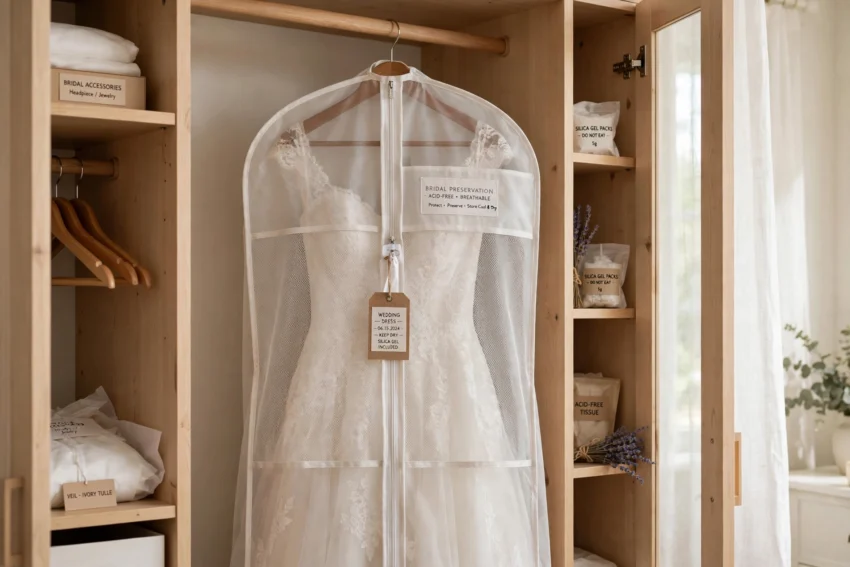
Your wedding dress deserves the same fabric-aware care after the wedding as it does when treating a stain during it. Generic storage advice treats every gown the same, but silk, satin, lace, and synthetic blends age differently, and that matters more than most storage guides admit.
Clean Before You Store
Have your dress professionally cleaned as soon as possible after the wedding, even if it looks spotless. Invisible residue from sweat, champagne, or cake can oxidise over time and cause yellowing that only appears months later. This step matters regardless of fabric, but is especially important for silk and other delicate fabrics that show ageing faster than sturdier materials.
Storage Differences by Fabric
Silk is the most sensitive to light, heat, and humidity, and benefits most from a fully dark, temperature-stable storage spot away from any fluctuation. Satin, particularly synthetic satin, tolerates minor humidity changes better than silk but still needs protection from direct light to avoid a yellowish tint developing over time. Lace is prone to snagging and stretching in storage, so it needs to be laid with extra care, ideally with acid-free tissue supporting any raised or dimensional lace details so they keep their shape. Structured fabrics like tulle or heavier crepe hold their shape well but should still avoid being compressed under other stored items.
What to Avoid Regardless of Fabric
Never store a wedding dress in a plastic bag, since trapped moisture leads to mould, mildew, and yellowing over time. Avoid cedar chests, which release acidic compounds that damage fabric slowly. Do not hang your dress for long-term storage, since the weight of the fabric and any beading can stretch or distort the shape over months and years. Keep the dress away from cooking smells and cigarette smoke, both of which can permeate fabric permanently.
Choosing the Right Storage Materials
Acid-free tissue paper and an acid-free archival box are worth the investment over a standard cardboard box, since regular cardboard contains acids that yellow fabric over time. Fold the dress along different lines each time you check on it, rather than always along the same creases, which helps prevent permanent lines from forming in one spot.
Where to Store It
A cool, dark, dry space with stable temperature works best, such as a closet or a spare room. Avoid attics and cellars, both of which see far more temperature and humidity swings than living spaces, along with a higher risk of pests. Under a bed in a climate-controlled room is a reasonable option if closet space is limited.
If your dress does develop a stain before you get to storage, our guide to removing stains from a wedding dress by fabric type covers safe treatment methods for each material.
Frequently Asked Questions
How soon after the wedding should I clean my dress?
As soon as reasonably possible. Invisible stains from sweat, drinks, or food can set and cause yellowing over time if left uncleaned.
Can I store my wedding dress in a plastic bag?
No. Plastic traps moisture, which can lead to mould, mildew, and yellowing over time. Use acid-free tissue and a breathable archival box instead.
Is silk harder to store than synthetic satin?
Yes, generally. Silk is more sensitive to light, heat, and humidity fluctuations, so it needs a more stable, consistently dark storage environment.