
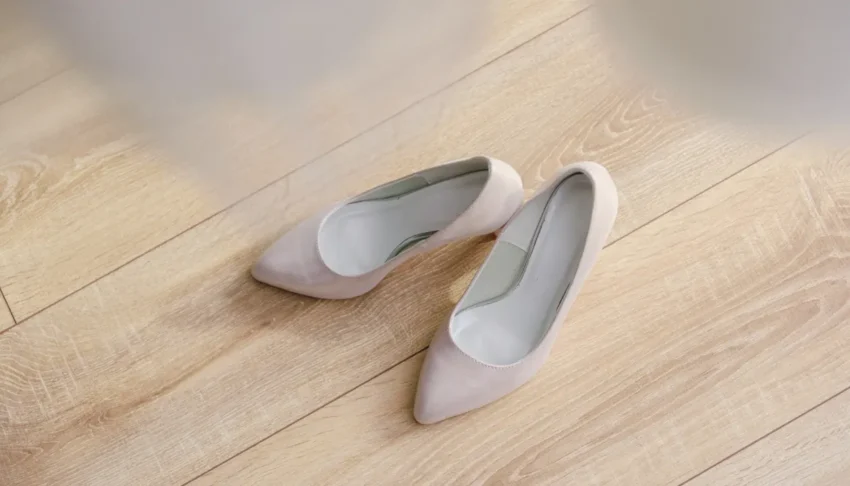
A wedding day can mean ten to twelve hours on your feet, between getting ready, standing at the ceremony, photos, and dancing. Beautiful shoes matter, but comfort decides whether you actually enjoy the day. Here is how to choose shoes that hold up, and how to prepare them properly beforehand.
Why Comfort Matters More Than It Seems
Shoes that feel fine during a quick fitting can turn painful under real wedding-day conditions, since a fitting rarely accounts for hours of continuous wear. Standing still during vows and photos often causes more discomfort than walking does, since sustained pressure on one spot builds up faster than the same pressure spread across movement. Testing shoes by standing still for several minutes, not just walking around the shop, gives a more honest sense of how they will feel.
Heel Height and Stability
Block heels and wedges distribute weight more evenly than thin stilettos, which makes them noticeably more comfortable over a full day. A heel under two inches significantly reduces strain compared with a higher heel, particularly on grass or uneven outdoor venues. If you are set on a higher heel for the ceremony, consider a lower pair for the reception and dancing, since few people notice a shoe change once the party starts.
Materials That Actually Breathe
Leather and soft fabric linings let your feet breathe and reduce friction far better than synthetic materials, which trap heat and moisture over a long day. This matters even for shoes you cannot see under a long dress, since discomfort affects your whole demeanour, not just how the shoe looks.
Breaking Shoes in the Right Way
New leather shoes need to soften and shape to your foot, but this should take a few short sessions, not weeks of suffering. Wear them around the house for a few hours at a time in the days before the wedding, with the same socks or tights you plan to wear on the day. Our guide to breaking in boots gradually covers the same short-session approach applied to sturdier footwear, and the principle carries over well to wedding shoes.
Adding Comfort Without Changing the Look
Discreet gel or foam inserts add cushioning without altering how the shoe looks from the outside. Applying them before any discomfort starts works better than reaching for them once your feet already hurt. Targeted cushioning at known pressure points, the ball of the foot or the back of the heel, makes the biggest difference over a long day.
Matching Shoes to an Outdoor or Grass Venue
A thin stiletto heel sinks into grass and soft ground, which is uncomfortable and risks damage to the shoe. A block heel, wedge, or platform handles uneven outdoor terrain far better. If your wedding is entirely outdoors on natural ground, factor this into your shoe choice before falling in love with a style that will not survive the setting.
Frequently Asked Questions
How much should I break in wedding shoes before the day?
A few sessions of one to two hours around the house in the week before the wedding is usually enough for leather shoes to soften without discomfort.
Are block heels more comfortable than stilettos for weddings?
Yes, generally. Block heels and wedges spread weight more evenly, which reduces fatigue over a long day compared with a thin stiletto heel.
Should I bring a second pair of shoes to change into?
Many brides do, switching to a lower or more cushioned pair for dancing after the ceremony and photos are done.