
A plain wedding dress is not a blank space to fill in randomly. It is a clean canvas that rewards a clear plan. Pick one focal point, match your accessories to your venue, and a simple gown reads as elegant rather than unfinished.
Start With Your Venue, Not Your Pinterest Board
The setting of your wedding should guide your accessory choices before style preference does. A beach or garden ceremony calls for lighter, nature-inspired pieces, delicate combs, simple drop earrings, minimal metal. A formal ballroom or church wedding can carry bolder, more structured jewellery and a fuller veil without feeling out of place. Deciding on venue-appropriate accessories first narrows the field and stops you buying pieces that clash with the setting later.
Pick One Focal Point
A plain dress has room for exactly one strong accessory choice before it starts to look cluttered. Choose earrings, a hairpiece, a belt, or a statement necklace as your single focus, then keep everything else minimal. Trying to make three different areas stand out at once is the most common mistake with a simple gown, since it pulls attention in different directions rather than creating one clear impression.
Using a Belt to Add Shape
A belt or sash is one of the most effective ways to add structure to a continuous, unembellished silhouette like a plain crepe or satin dress. It breaks up the fabric and draws the eye to the waist. A thin metallic belt suits a modern look, while a fabric sash in a soft tone keeps things romantic. Skip a belt if your dress already has any waist detailing, since the two will compete rather than complement each other.
Veil or Hair Accessory, or Both
Many brides wear both a veil and a hair accessory, placing a comb, vine, or clip at the crown and securing the veil just beneath it. This lets you remove the veil after the ceremony for photos or dancing, while the hair piece stays in place for the rest of the day. If you are still deciding on the rest of your look, our guide to wedding hairstyles covers styles that pair well with both options.
Jewellery That Matches Your Neckline
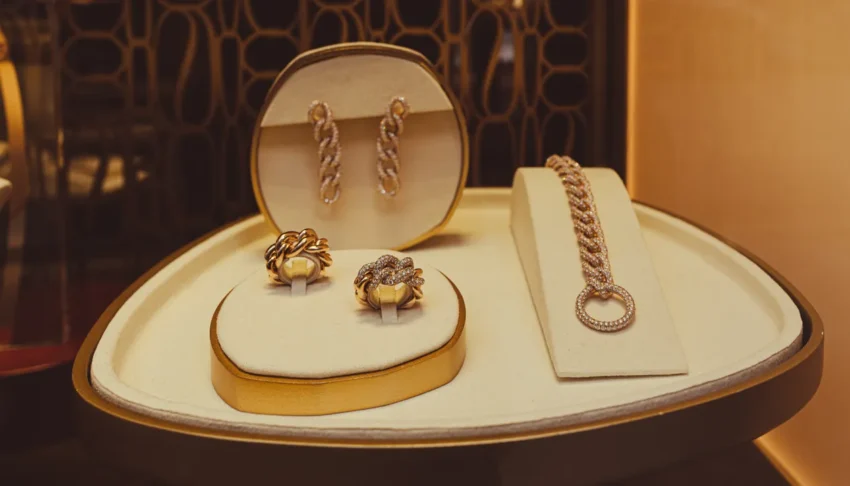
A high or detailed neckline suits smaller, understated earrings, since a bold necklace would compete with the dress. A plain, low, or square neckline gives more room for a statement necklace or a pair of chandelier earrings. Matching your jewellery metal tone to your engagement ring keeps the overall look coordinated rather than scattered.
If your dress includes sleeves, accessorising works a little differently, since the sleeve itself already adds visual interest. Our guide to minimalist wedding dresses with sleeves covers how sleeve style changes what else your outfit needs.
Frequently Asked Questions
Is a belt necessary for a plain wedding dress?
No. A belt works well on an unembellished silhouette but is not required, and it should be skipped if the dress already has waist detailing.
How many accessories should I wear with a simple wedding dress?
One clear focal point, whether that is jewellery, a hairpiece, or a belt, tends to look more polished than combining several statement pieces at once.
Should jewellery match my engagement ring?
Matching metal tones creates a coordinated look, though it is not a strict rule. Mixed metals can work if done deliberately rather than by accident.