
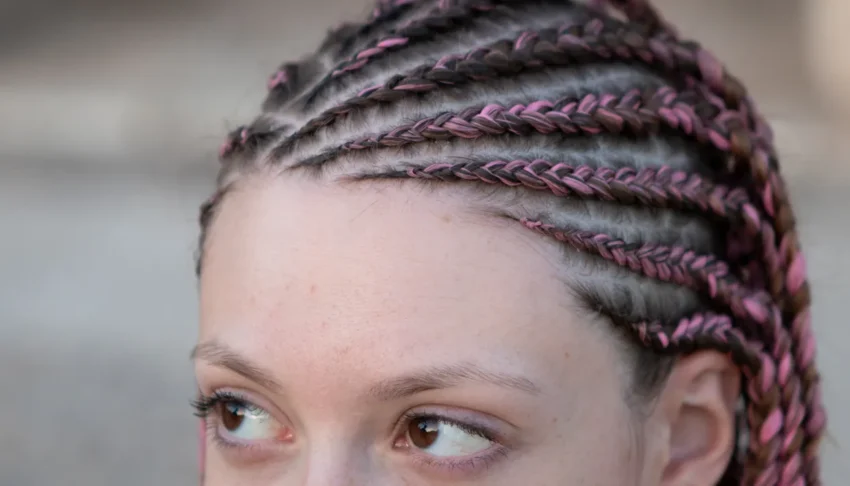
Frizzy braids are one of the most common complaints after a fresh install, and most advice online buries the fix in long, unsorted lists. This guide splits the routine into two clear parts: what to do before braiding, and a short daily habit that keeps frizz down afterwards, including how humidity changes the approach.
Why Braids Frizz in the First Place
Frizz happens when the outer layer of your hair lifts and lets moisture in or out unevenly. Loose parting, damp hair at the time of braiding, and rough sleeping habits all make this worse. Humidity speeds it up further, since hair pulls moisture from the air, which is why the same braids can look neat one week and frizzy the next depending on the weather.
Getting the Prep Right Before Braiding
Wash and deep condition your hair before your appointment, and make sure it is fully dry before braiding starts. Damp hair shrinks as it dries inside the braid, which pulls strands loose and causes frizz within days. A lightweight gel applied at the root before braiding helps lay flyaways flat from the start, and neat, even parting reduces the crossing strands that are the most common cause of early frizz.
A Simple Daily Routine
Most guides list a dozen products with no order of priority. In practice, a short daily habit covers most of what you need:
- Smooth flyaways each morning with a small amount of light oil or edge control, applied sparingly
- Sleep in a silk or satin scarf, or use a satin pillowcase if a scarf feels uncomfortable
- Mist with a lightweight leave-in spray if braids feel dry, rather than applying heavy products daily
Heavy product use every day causes buildup, which attracts dirt and makes braids look tired faster than the frizz itself.
Adjusting for Humid or Dry Climates
In humid conditions, lightweight anti-frizz serums with a light hold work better than heavy gels, since heavy products can go greasy in the heat while still not controlling frizz. In dry conditions, the priority shifts to moisture, since dry hair frizzes as it seeks moisture from the air. A hydrating mist a few times a week helps more than a strong-hold product in this case.
Synthetic Hair vs Human Hair Frizz
Synthetic braiding hair tends to frizz at the ends first and responds well to a quick dip in hot water to seal them. Human hair frizzes more evenly across the length and responds better to leave-in conditioner and gentle brushing with a soft bristle brush. Knowing which type you have changes which fix actually works, rather than trying methods meant for the other type.
If you are considering braids for an upcoming event, our guide to Bora Bora braids covers a style built specifically around human hair and a low-tension technique, and our wedding guest hairstyles guide covers braided options that hold up through a full day.
Frequently Asked Questions
How often should I moisturise braids to prevent frizz?
A light mist two to three times a week is usually enough. Daily heavy moisturising tends to cause buildup rather than prevent frizz.
Does humidity make braids frizz worse?
Yes. Humid air adds moisture unevenly to the hair, which lifts the outer layer and causes frizz faster than in dry conditions.
Can frizzy braids be fixed without redoing them?
Yes, in most cases. A light serum or edge control smooths flyaways at the root, and only the specific frizzy sections usually need attention rather than the whole style.